The most common word nowadays is “crisis”. We are told it is the economic crisis. We listen to never ending discussions about currency, debts, markets, economic increase, searching for solutions… Sometimes we are told that behind the economic crisis there is a moral crisis. If we stop for a moment to think, perhaps we will find many others crises: cultural crisis, crisis of values, ecological crisis, crisis of the concept of government, political crisis, and crisis of authority… Even in the religious sphere we hear that there is a crisis of faith (which is why Pope Benedict has proclaimed for Catholics the Year of Faith).
It’s clear that we feel the crisis at its worst in everyday life. Our politicians seek to resolve the situation, but only the economic part. Searching for a way to get out of this crisis indicates a wide range of possible solutions, as well as a deeper question.
On the one hand, the political left and right compete for a chance to implement their own economic policies. Left-wing politicians declare they are sensitive to the poor and want to rule by raising taxes in order to promote solidarity. All this is based on a concept of a strong guarding State. Right-wing politics in general prefers the free market to a strong State. Although it promotes human rights for everyone, it is an impersonal mechanism that doesn’t watch over the poor. Within both types of politics we find a strong individualism that influences economic ethics as well as personal values. The consequence: moral crisis. Thus is the present condition in the so-called western countries.
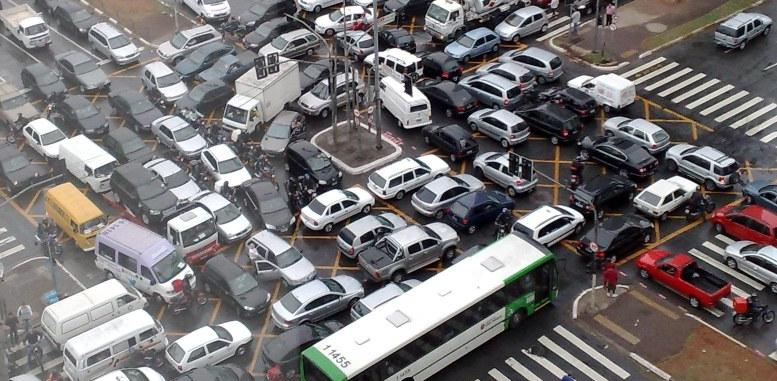
foto: www.codeofhonor.com
On the other hand, the search for how to get out of the actual crisis indicates a deeper question. Let us omit the different policies and their economic approaches. The question is: why do we find ourselves in so many different crises at the same time? Is it only because something went wrong in the economy, or is the root in our behavior? Has individualism led us to deadlock? Shouldn’t we be looking for other reasons that lie beyond the economic?
Catholic social teaching, in accordance with the Gospel, clearly gives preference to the poor and the weak that are most in need. This attitude is a fruit of reflection on the social situation, within the frame of the Gospel and natural law. In the Gospel, Jesus gives first place to the undisputable dignity of each human person. By facing our wide-ranging crisis, which began a couple of decades ago, we have to admit that Blessed Pope John Paul II was a great prophet of human dignity. We need to rediscover his words. If we consider the nature of man, we arrive at a basic truth: each human person lives in the balance between freedom and responsibility. We are not able to live without relationships. The State can not exist without families, citizen based movements, organizations… There is something very inhuman in our current socialist and free-market approaches to human society.
Behind the economic crisis – behind the competition between different models of politics –there is a background or basis of how we see the human person; with how much respect and how sturdily are we ready to act, live, and behave towards human nature? It seems that the crisis is really anthropological. The next question then, must be: where can we look or who can we find – and accept without prejudices – with the right answer for a new, deeper and more respectful anthropological approach? Let’s not forget: we have to face the problem now, amid the mainstream individualism that surrounds us.

